
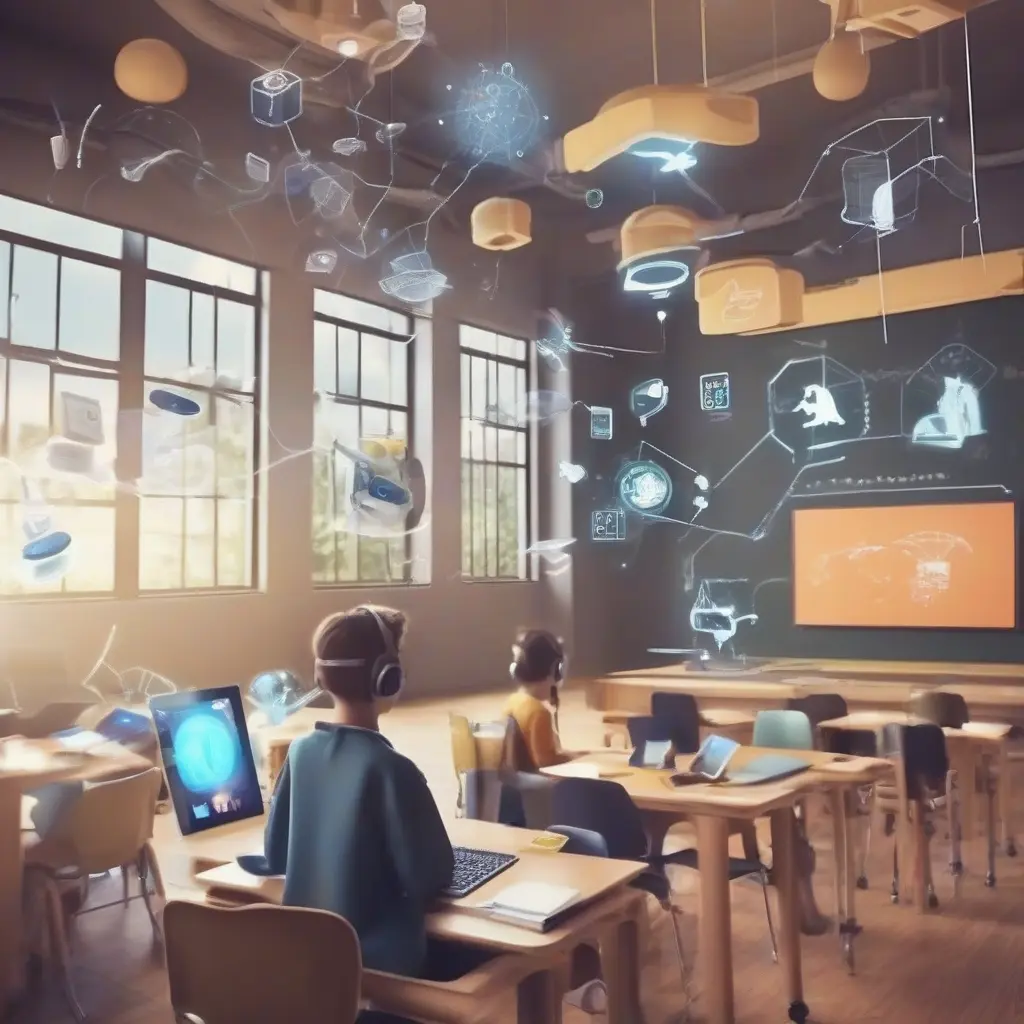
The integration of augmented reality (AR) into education is rapidly evolving, offering transformative experiences that enhance the learning process. As technology continues to advance, AR tools are becoming more accessible and user-friendly, reshaping traditional teaching methods. These innovative solutions not only engage students more effectively but also cater to various learning styles. From immersive simulations to interactive lessons, AR is set to revolutionize educational environments, promoting deeper understanding and collaboration. This article explores the future tech updates in augmented reality and how they are poised to redefine the educational landscape.
The Role of Augmented Reality in Modern Education
Augmented reality serves as a bridge between the physical world and digital information, creating interactive learning experiences that were previously unimaginable. It allows students to visualize complex concepts in three dimensions, enhancing comprehension and retention. For instance, in subjects like biology, AR can provide detailed 3D models of human anatomy, making abstract concepts tangible. This technology facilitates experiential learning, where students can engage directly with materials, promoting curiosity and active participation. By integrating AR into curricula, educators can create dynamic lessons that resonate with diverse learners, fostering an inclusive educational environment.
Enhancing Engagement through Interactive Learning
One of the most significant advantages of augmented reality in education is its ability to boost student engagement. Traditional teaching methods often struggle to maintain students’ attention, especially in a digital age where distractions are abundant. AR introduces gamification elements into lessons, turning learning into an exciting and captivating experience. For example, students can collaborate in virtual environments to solve problems or complete challenges that reinforce the curriculum. This level of interaction not only maintains interest but also promotes teamwork, critical thinking, and problem-solving skills essential for today’s workforce.
AR Tools for Science Education
In science education, augmented reality is becoming an invaluable tool for enhancing understanding and exploration. AR applications allow students to conduct virtual experiments or explore scientific phenomena without the limitations of a traditional classroom. For instance, learners can manipulate molecular structures in 3D, view chemical reactions in real time, or even take virtual field trips to significant historical sites. These experiences empower students to conduct in-depth research and foster a sense of inquiry, paving the way for future scientists and innovators. The ability to visualize abstract scientific concepts tangibly enhances learning outcomes.
The Impact of AR on Historical Learning
Augmented reality is transforming the way history is taught by making past events more relatable and engaging. Through AR applications, students can visualize historical events, interact with historical figures, and experience different cultures in a highly immersive manner. For instance, students can explore ancient civilizations, walk through significant battlefields, or participate in reenactments. This level of immersion allows learners to grasp the context and nuances of historical events, making lessons more memorable. By providing interactive narratives, AR bridges the gap between theoretical knowledge and real-world applications.
Personalized Learning Experiences with AR
Personalization is a cornerstone of modern education, and augmented reality supports tailored learning experiences that meet individual student needs. AR applications can adapt to various learning styles and paces, providing customized resources and activities that cater to each learner. For example, students struggling with a particular topic can access specialized AR modules that break down concepts into manageable parts or offer additional practice. This individualized approach not only fosters student independence but also enhances confidence, ultimately leading to improved academic performance. The adaptability of AR in the classroom can bridge learning gaps effectively.
Collaborative Learning Environments Enhanced by AR
Augmented reality encourages collaboration among students, fostering skills required in both academic and real-world settings. Through AR applications, learners can work together on projects, share discoveries, and present findings in engaging formats. Students can collaborate remotely, using AR to visualize ideas or solutions interactively, regardless of their physical locations. This collaborative aspect promotes communication, teamwork, and interpersonal skills, essential for success in any field. Educators can leverage AR to facilitate group projects and discussions, ensuring that students benefit from diverse perspectives and innovative problem-solving strategies.
Future AR Innovations in Education
The future of augmented reality in education is promising, with ongoing advancements in technology enhancing its capabilities even further. Innovations such as wearables and mobile devices are set to make AR experiences more mainstream. Projects utilizing 5G technology will enable smoother and more immersive interactions. Moreover, artificial intelligence is beginning to be integrated into AR tools, allowing for even smarter personalization. As a result, educators can expect more sophisticated applications that adapt to students in real-time, paving the way for an educational revolution where learning is both comprehensive and captivating.
Challenges in Implementing AR in Education
Despite its potential, implementing augmented reality in educational settings presents various challenges. One major hurdle is the cost associated with acquiring AR technology and developing content suitable for the curriculum. Many schools may lack the necessary budget, restricting access to these innovations. Additionally, educators need proper training to effectively integrate AR into their teaching methods. There is also the challenge of ensuring that AR content is aligned with learning objectives and standards. Addressing these issues requires collaboration between educational institutions, technology developers, and governments to facilitate a smooth rollout of AR in classrooms.
Conclusion
Augmented reality is positioned to transform the educational landscape, offering interactive and engaging learning experiences that cater to diverse student needs. As technology evolves, the potential applications of AR will continue to expand, enhancing educational practices and outcomes. However, educators and institutions must address challenges such as funding and training to fully harness these innovations. With collaborative efforts, augmented reality can become an integral part of educational environments, paving the way for a future where learning is as dynamic and interactive as the world around us.