
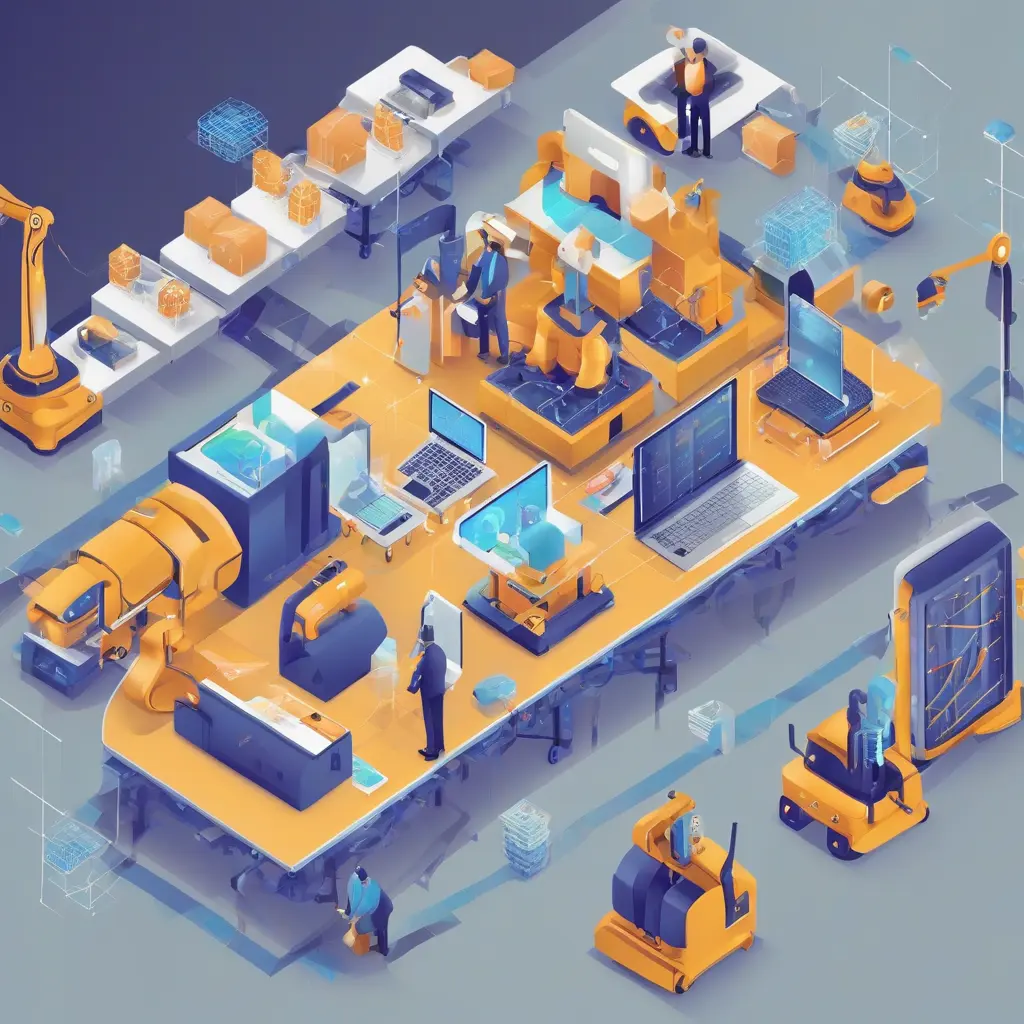
Artificial Intelligence (AI) is rapidly changing the landscape of supply chain management, providing businesses with innovative tools to streamline operations, enhance decision-making, and optimize resource allocation. By leveraging AI technologies, companies can analyze vast amounts of data to predict trends, improve customer satisfaction, and reduce operational costs. This shift not only enhances productivity but also allows businesses to respond swiftly to market dynamics. In this article, we explore various ways AI tools are revolutionizing supply chain management, examining their benefits, applications, and future implications for businesses across different sectors.
Improving Demand Forecasting with AI
AI tools significantly enhance demand forecasting by utilizing machine learning algorithms to analyze historical sales data, customer behavior, and market trends. Traditional forecasting methods often fail to account for various external factors, leading to inaccuracies. In contrast, AI-driven systems can dynamically adjust predictions based on real-time data inputs, ensuring businesses maintain the right inventory levels. This accuracy not only minimizes stockouts and overstock situations but also optimizes working capital, enabling firms to respond more effectively to changing consumer demands.
Optimizing Inventory Management
AI tools play a crucial role in optimizing inventory management by automating stock level monitoring and replenishment processes. With sophisticated algorithms, these tools can predict optimal inventory levels needed to meet future demand while minimizing excess stock. This results in lowered holding costs and reduced waste. Businesses can also benefit from AI’s ability to identify slow-moving items, thus enabling them to develop targeted strategies for inventory reduction. Overall, effective inventory management powered by AI contributes to enhanced operational efficiency and improved profitability.
Enhancing Supplier Relationship Management
Artificial Intelligence enhances supplier relationship management by providing insights from data analysis to evaluate supplier performance consistently. AI tools can monitor key metrics such as delivery times, quality of goods, and pricing trends. This real-time data allows businesses to identify reliable suppliers and address any issues quickly. Moreover, AI-driven platforms can facilitate collaborative relationships by automating communication and contract management, thus fostering better partnerships. By nurturing these relationships effectively, companies can benefit from improved pricing, enhanced service levels, and innovation in product offerings.
Streamlining Logistics and Transportation
AI tools streamline logistics and transportation by optimizing route planning, reducing delivery times, and lowering shipping costs. Through real-time traffic data analysis and predictive modeling, AI can suggest the most efficient routes for delivery trucks, mitigating delays caused by traffic congestions or road closures. Additionally, machine learning algorithms can enhance fleet management by predicting maintenance needs and improving utilization rates. As a result, businesses not only save costs but also improve customer satisfaction through timely deliveries and efficient service.
Facilitating Real-time Decision Making
AI tools enable real-time decision-making in supply chain management by providing businesses with insights derived from large volumes of data. With advanced analytics, decision-makers can visualize trends and identify potential bottlenecks instantly. This capability empowers companies to make strategic adjustments in their operations promptly, whether it involves reallocating resources or altering production schedules. Ultimately, real-time insights facilitate agility and responsiveness, ensuring that businesses are better prepared to adapt to unforeseen challenges and shifts in market conditions.
Reducing Operational Costs with AI
One of the most significant advantages of implementing AI tools in supply chain management is the potential for reducing operational costs. By automating repetitive tasks and optimizing processes, businesses can significantly lower labor costs and minimize human errors. AI technologies can also identify inefficiencies in the supply chain, allowing for targeted improvements that enhance productivity. These cost savings can subsequently be reinvested into other areas of the business, driving growth and innovation.
Improving Customer Experience
AI tools play a vital role in enhancing customer experience by enabling personalized service and efficient order management. Businesses can leverage AI algorithms to analyze consumer data and preferences, tailoring their offerings accordingly. Furthermore, AI-driven chatbots can improve customer support, providing instant responses to inquiries and ensuring timely order updates. By prioritizing customer experience through technology, companies can foster loyalty, increase customer satisfaction, and differentiate themselves from competitors.
Future Trends in AI for Supply Chain Management
The future of AI in supply chain management is poised for remarkable advancements, with trends such as increased automation, greater AI integration, and enhanced predictive capabilities on the horizon. As businesses continue to adopt AI technologies, we can expect further improvements in accuracy and efficiency. Technologies like blockchain combined with AI may also help in enhancing transparency in supply chains, thereby increasing trust among stakeholders. As AI evolves, its role in supply chain management will likely become more strategic, supporting long-term planning and competitive advantage.
Conclusion
AI tools are undoubtedly transforming supply chain management by enhancing efficiency, improving decision-making, and fostering better partnerships within the industry. As businesses increasingly recognize the value of these technologies, they are likely to invest further in AI-driven solutions to remain competitive. The ongoing developments in AI signal a promising future for supply chain management, offering unprecedented opportunities for innovation and growth across various sectors.