
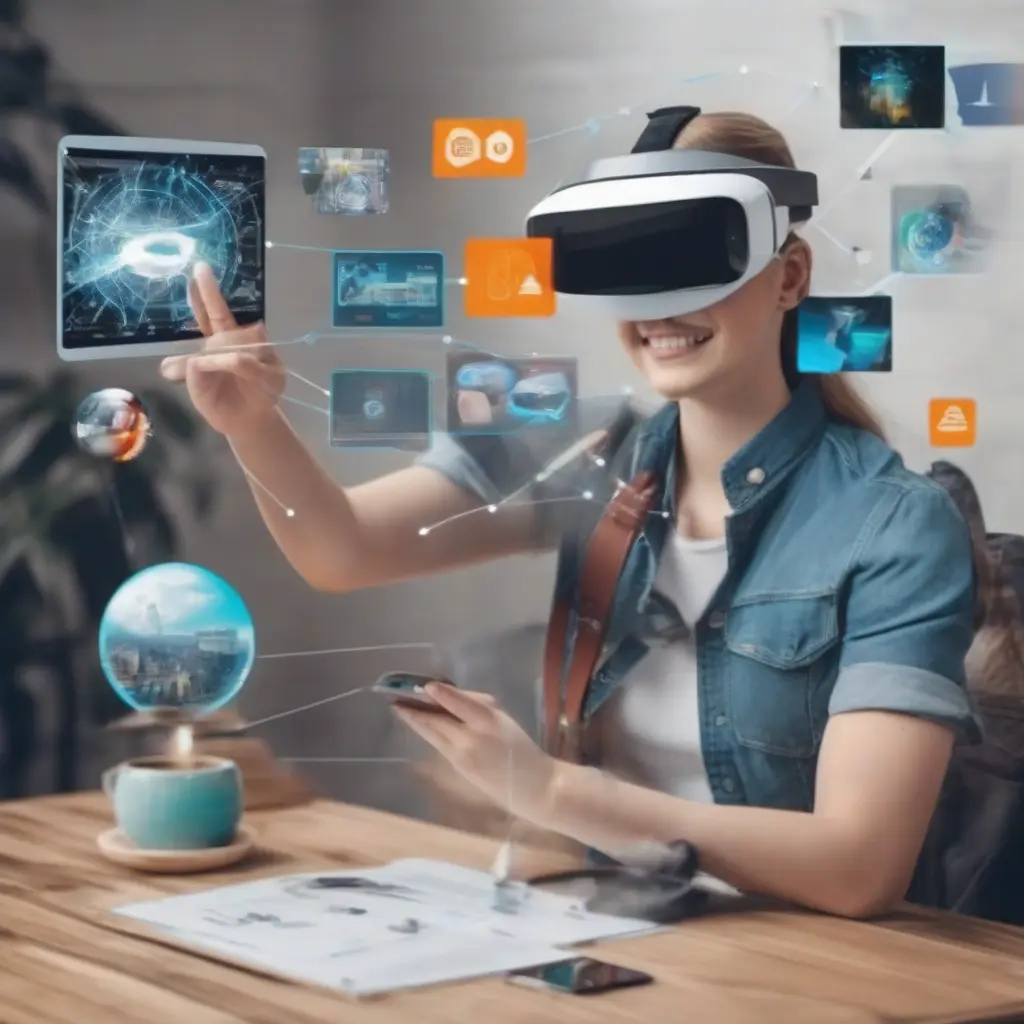
Augmented reality (AR) continues to evolve, significantly impacting various industries such as gaming, retail, education, and healthcare. As technology advances, new updates and innovations emerge that enhance user experiences and expand the capabilities of AR. In 2023, we are witnessing groundbreaking developments, including improved hardware, software integrations, and novel applications that redefine how we interact with the digital world. This article explores the top tech updates in augmented reality that are set to make waves in the coming year.
Advancements in AR Hardware
The landscape of augmented reality hardware is witnessing remarkable advancements, particularly with the introduction of lighter and more efficient headsets. Companies such as Meta and Microsoft are working on devices that offer enhanced display resolution and improved processing power, enabling smoother and more immersive AR experiences. Innovations like eye tracking and gesture recognition are also being integrated, allowing users to navigate interfaces intuitively. This progression in hardware technology is crucial for expanding the scope of AR applications across various sectors.
Integration with Artificial Intelligence
The integration of artificial intelligence (AI) into augmented reality is revolutionizing the way users interact with digital content. AI enhances AR applications by enabling smarter object recognition, real-time data analysis, and personalized user experiences. For instance, AR applications can now tailor content based on user behavior and preferences, making interactions more relevant and engaging. This synergy between AI and AR not only improves usability but also opens new avenues for innovative applications in fields like marketing and training.
Real-World Applications in Retail
Retailers are increasingly adopting augmented reality technologies to enhance customer experiences and streamline operations. Innovations like virtual try-on solutions allow shoppers to visualize products in a realistic context before making a purchase, which boosts consumer confidence and reduces return rates. Additionally, AR-driven in-store navigation and interactive displays are improving customer engagement and product visibility. As retailers look to provide unique shopping experiences, AR technology is becoming an essential part of their digital strategy.
Transforming Education with AR
Augmented reality is transforming the educational landscape by making learning more interactive and engaging. Tools that integrate AR allow students to visualize complex concepts and participate in immersive simulations. For instance, medical students can practice surgeries using AR models, while history classes can bring historical events to life through interactive timelines. This hands-on approach not only aids comprehension but also caters to various learning styles, making education more accessible and enjoyable.
Enhanced Gaming Experiences
The gaming industry is one of the most dynamic areas for augmented reality innovations. New games are leveraging advanced AR technologies to create immersive gaming experiences that blend digital and physical environments. Titles like Pokémon GO have set the stage for innovative gameplay that encourages exploration and social interaction. With the potential for multiplayer experiences to flourish, as well as the incorporation of location-based AR mechanics, the gaming sector will continue to push boundaries in 2023.
AR in Healthcare Innovations
Augmented reality is making significant strides in the healthcare industry, improving training, diagnosis, and patient care. Surgeons are using AR overlays to gain deeper insights during procedures, while medical students use AR simulations for hands-on practice. Furthermore, AR applications enable patients to understand their conditions through visually enhanced explanations and interactive models. This type of technology is not only enhancing the effectiveness of healthcare delivery but also ensuring that medical professionals are better prepared for real-life scenarios.
Collaboration Tools Enhanced by AR
In an increasingly remote work environment, augmented reality is enhancing collaboration and communication among teams. AR-powered tools allow remote workers to visualize projects in real-time, offering shared spaces where ideas can be discussed more effectively. Applications such as virtual whiteboards and 3D modeling platforms are streamlining workflows and ensuring that teams remain connected, regardless of their physical locations. This evolution in collaboration technology is crucial for maintaining productivity in remote settings.
Challenges in AR Development
Despite the exciting advancements in augmented reality, several challenges remain in its widespread adoption. Issues such as user privacy, data security, and the need for high-speed internet continue to hamper progress. Additionally, creating content that fully utilizes AR’s capabilities requires significant investment and expertise. Overcoming these hurdles is essential for ensuring that AR technologies can reach their full potential across various industries and applications.
Future of Augmented Reality
The future of augmented reality looks promising as technology continues to advance rapidly. With ongoing investments in AR research and development, we can expect innovations that further enhance user experiences and functionalities. Emerging trends, such as the convergence of AR with 5G technology and the metaverse, will likely drive the next wave of growth in this field. As industries embrace these technologies, augmented reality is poised to become an integral part of our daily lives.
Conclusion
In summary, the world of augmented reality is evolving at an unprecedented pace in 2023, characterized by exciting advancements across multiple sectors. From enhanced hardware and AI integrations to transformative applications in education and retail, the impact of AR technologies is profound. As we continue to explore these innovations, it is clear that augmented reality will play a crucial role in shaping our interaction with both digital and physical worlds, making the future of this technology particularly bright.